
At the millennium, the Gallup organization asked the American public to rank the most important events of the 20th century. Sixty-six percent named “Women gaining the right to vote”—ahead of landing a man on the moon, the fall of the Soviet Union, the Great Depression, and World War I. Only World War II ranked higher.
American women gained the vote in 1920 with the ratification of what has become known as the Susan B. Anthony Amendment. Were it not for Alice Paul, it could easily have taken years longer. Woodrow Wilson opposed it in both his 1912 and 1916 presidential campaigns. So did the members of his party who controlled every key congressional committee. With America’s entry into the European war in 1917, they hoped to table the question of women’s voting rights indefinitely.
The national movement for women’s right to vote had been gathering pace for two-thirds of a century when the 28-year-old Alice Paul delivered her first spectacular coup to marshal support for the cause. It was an enormous parade down Pennsylvania Avenue—featuring 5,000 marchers, inspiring music, and beautiful floats—on the day before Wilson’s 1913 inaugural parade on the same route. Tourists jamming the nation’s capital for the inauguration couldn’t help but notice the front-page stories trumpeting Paul’s planned spectacle. Hundreds of thousands attended as spectators. When drunken hoodlums assaulted the marchers, the D.C. police not only failed to stop it but joined in with physical and verbal abuse of the women.
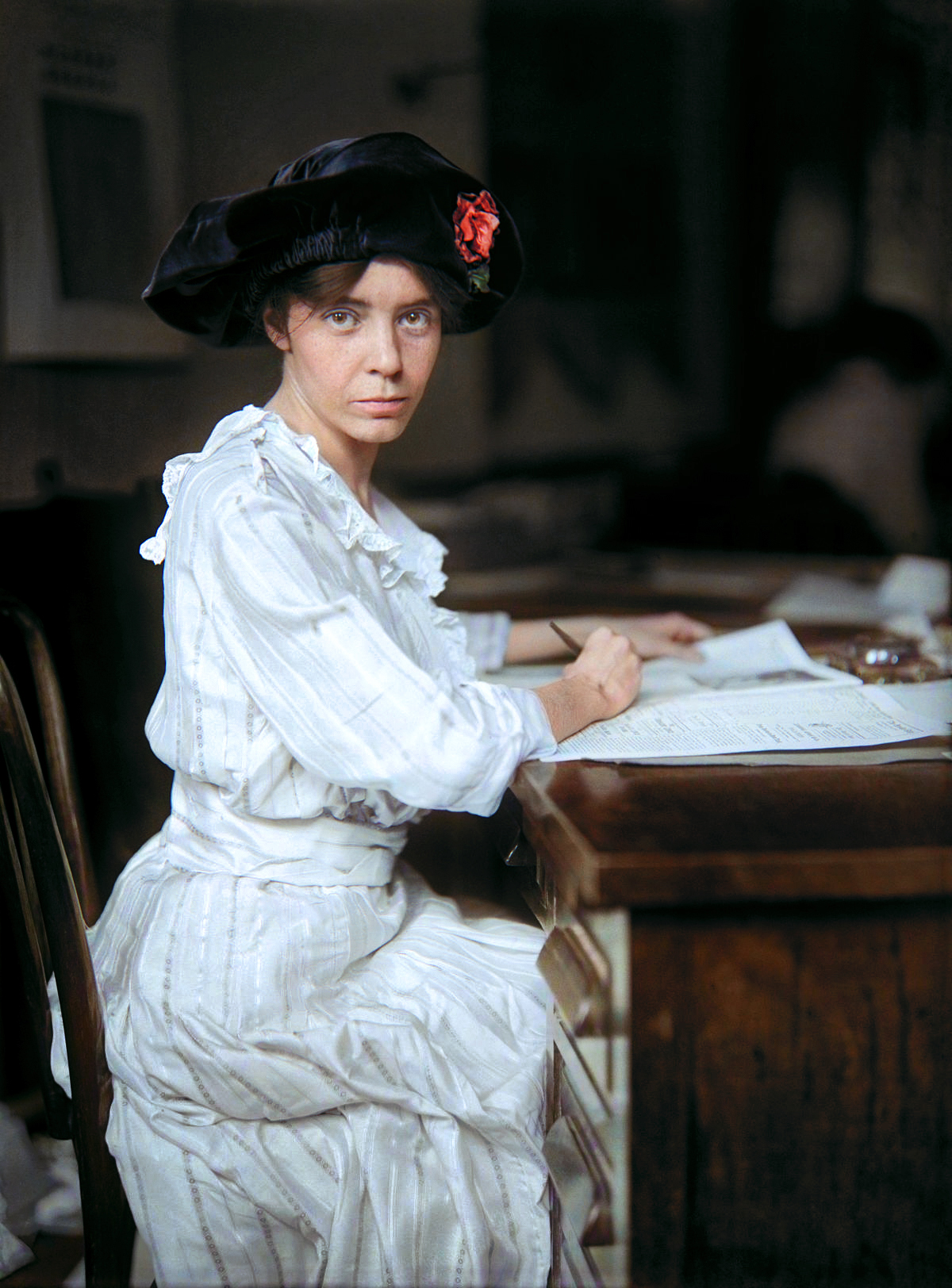
Paul was undaunted. Belying her diminutive stature and quiet demeanor, she possessed an iron determination, superb organizational skills, and an insatiable appetite for work. She had already earned a bachelor’s degree in biology (from Swarthmore), a master’s in sociology, and a PhD in economics (both from the University of Pennsylvania). In 1909, while pursuing further graduate work at the University of London, she joined the British suffrage movement under the leadership of the militant Emmeline Pankhurst.
Pankhurst was notorious for her roving mobs that smashed windows, blew up mailboxes, set fire to the Theatre Royal, and shattered porcelains at the British Museum. But Paul would have none of that. True to her Quaker heritage, she insisted on nonviolent methods. On her return home from Europe, she was asked by the Philadelphia Tribune if she ever threw a stone through a window. “No, indeed,” she answered. “I never did and I never shall. I think such deeds belong to rioters.” What she had done, though, was join in a hunger strike after being imprisoned for shouting to British prime minister H.H. Asquith during a speech, “What about votes for women?”
In March 1913, two weeks after the great suffrage parade, Paul sat face to face with Wilson in the White House and politely but fearlessly requested that he offer support to a women’s suffrage amendment to the Constitution. She and her modest delegation received the first of what would be many patronizing brush-offs from the president. In 1917, Paul took the fight with the president up a notch. Over the course of two years, she and her “silent sentinels” held vigil before the White House. A more peaceful protest could not be imagined. The women stood in dignified silence, stationed at precise intervals from one another in a perfect row. Their banners asked, “Mr. President: How Long Must Women Wait for Liberty?” and lampooned the hypocrisy of fighting a war for democracy while denying it at home.
When the silent sentinels were assaulted by rowdies, the police arrested the victims rather than their attackers. For the alleged misdemeanor of “sidewalk obstruction,” the suffragists received absurdly long prison sentences. In both the District jail and the Occoquan prison workhouse, they were subjected to extraordinary physical abuse. Paul was involuntarily committed to a prison psychopathic ward. As her hunger strike dropped her weight to just 60 pounds, Wilson personally approved force-feeding her, a then primitive procedure that risked her life. (Too late for Paul, the legal system would eventually vindicate the silent sentinels’ right to picket the White House.)
Paul’s nonviolent but attention-grabbing tactics, including the silent sentinels’ permanent vigil before the White House, kept women’s suffrage in the headlines throughout the war. News that women were serving lengthy prison sentences for their peaceful protests of the president’s opposition to the Anthony Amendment ran front and center on page one in newspapers across the country. In The New York Times, the battle for women’s voting rights appeared above reports of the French victory at Verdun and America’s first day of the draft. The Los Angeles Times used two lines of type for a page-one suffrage headline that pushed Verdun and the German victory in Champagne to page two.
With pro-suffrage public pressure mounting and the midterm elections less than a year away, Paul and all of the imprisoned suffragists were abruptly released in late November 1917. Acknowledging the gesture, Paul announced the suspension of all demonstrations in the hope that Wilson would at last lead the fight for the Anthony Amendment. Instead, he again demurred—offering only his private endorsement to a group of Democratic lawmakers of the night before two-thirds of the House voted to approve it. Thereafter, he resumed his studied silence as the bill languished in the Senate. When his refusal to speak on the Anthony Amendment in public stretched into a seventh month, Paul resumed her agitation.
Once again, peacefully protesting suffragists were arrested and imprisoned. Once again, public outrage eventually moved the Wilson administration to abruptly release them. In September 1918, Wilson spoke his first public words in support of the Anthony Amendment, but failed to convince a single member of his party in the Senate. Paul credited Wilson for finally speaking up in its support, albeit “too reluctantly and tardily.”
Only after the 1918 midterms stripped Wilson of his majorities in both the House and Senate, in part due to Paul’s national campaign against Wilson’s candidates, did the new 66th Congress approve the Anthony Amendment in June 1919. Paul and her troops then continued to wage the fight for ratification among the states. A little more than a year later, Tennessee became the thirty-sixth and final state needed. The photograph of Paul unfurling a banner with 36 stars from the balcony of her D.C. headquarters appeared in newspapers across the country, indelibly capturing the moment of victory.
Alice Paul is remembered today for her extraordinary contributions to women’s constitutional right to vote, and understandably so. Her unshakable commitment demanded incredible courage. But her outsize impact on the nation’s history is far greater than that. She stands out as America’s Gandhi, whose legacy of nonviolent, nonresistant protest brought a president to heel and rewrote the Constitution—while pointing the way for the nonviolent movements of Dr. Martin Luther King Jr. and others that followed throughout the 20th century.
She dedicated the entirety of her life to advancing women’s rights and human rights. She authored the original Equal Rights Amendment in 1923, at a time when the Supreme Court refused to apply the 14th Amendment to sex discrimination. In 1938, she cofounded the World Woman’s Party, later winning support for human rights without distinction as to sex in the 1945 United Nations charter (a notable omission in the League of Nations charter of 1919).
Years later, she lobbied successfully for the prohibition of sex discrimination in Title VII of the Civil Rights Act of 1964. She would live to see the Equal Protection Clause of the 14th Amendment applied to guarantee men and women equal rights beginning in the 1970s. Asked shortly before her death to assess her lifelong impact, the 92-year-old resident of a Quaker convalescent home in Moorestown, New Jersey, described the struggle for human rights as a mosaic. “Each of us,” she said, “puts in one little stone.” Her stone shines especially brightly because she taught us not to throw it.